

Translate:

All About Different Types of Microscopes
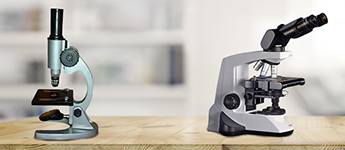
Microscopes are specialized optical instruments designed to produce magnified visual or photographic ( including digital) images of objects or illustrations that are too small to be seen with the naked eye. Inclusively, this varied group of tools includes not only multiple-lens ( conflation microscope) designs featuring intents and condensers but also consists of really simple single-lens instruments that are handheld, ditto as a photography loupe or common magnifying glass.
Compound microscope:
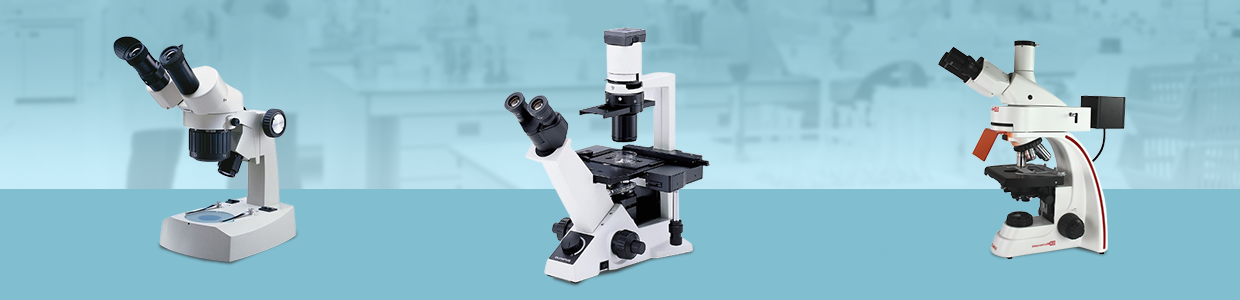
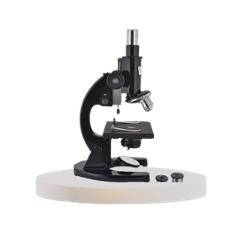
A compound microscope is frequently applied to a biological microscope, but is a compound microscope always a biological microscope? You might be surprised at the answer. A compound microscope is a high-power ( high magnification) microscope that uses a conflation lens system. A conflation microscope has multiple lenses; the objective lens ( normally 4x, 10x, 40x, or 100x) is compounded ( multiplied) by the eyepiece lens ( normally 10x) to secure high magnification of 40x, 100x, 400x, and 1000x.
Refined padding is achieved by using two lenses rather than just a single magnifying lens. While the eyepieces and the objective lenses result in high magnification, a condenser beneath the stage focuses the light directly into the sample.
Fluorescence microscopy:
A fluorescence microscope is tectonic the same as a conventional light microscope with added features to enhance its capabilities. The conventional microscope uses visible light (400 400-700 nanometers) to illuminate and produce a magnified image of a sample.
A fluorescence microscope, on the other hand, uses a much-evolved intensity light source that excites a fluorescent species in a sample of interest. This fluorescent species, in turn emits a lower energy light of a longer wavelength that produces the magnified image instead of the original light source. Fluorescent microscopy is used hourly to image specific features of small exemplars comparable to microbes. It's also used to visually enhance 3-D features at small scales.
Stereo microscope:
A stereo microscope is a type of ocular microscope that allows the user to see a three-dimensional view of an object. Otherwise known as an assaying microscope or stereo hum microscope, the stereo microscope differs from the fusion light microscope by having separate meaning lenses and eyepieces. This results in two separate optical paths for each eye. Three-dimensional illustrations are produced by the different list views for the left and right eye.
Stereo microscopes use reflected light from the object being studied, compared to the transmitted light that's used by fluorescence light microscopes. Hyperbole ranges from 7.5 to 75x. Opaque, thick, solid objects are ideal for study with these tools.
Consummate, but not all, stereo microscopes have two light sources: one above the sample, which is reflected in the eyepieces, and one below the sample for illumination through thinner samples. Resolution is determined by the wavelength of light and numerical aperture of the objective, the same as any other form of ocular light microscopy.
Inverted Microscopes:
In inverted microscopy, an inverted microscope has a light source and condenser positioned below the observation stage, and the objective lenses positioned above it. An inverted microscope, notwithstanding, features the diametric construction they have the condenser and light source above the stage and the objective lenses below. Reversing the construction of a microscope in this way isn't just for fun, nonetheless; there are some real benefits to using an inverted microscope over a traditionally designed one.
The biggest advantage to using an inverted microscope is in the observation of consanguineous samples. They're extremely useful for viewing living cells or organisms in a more natural context than a traditional slide, hourly, because the construction of an inverted microscope makes observation of consanguineous material in a serviette culture tankard or a petri dish possible.
This makes the reversed confines inestimable in cell culture viewing. Reversed microscopes are also excellent for metallurgical observation, as polished samples can be placed on top of the observation stage and either observed from below using reflective goal lenses. Ultimately, and possibly most importantly, reversed confines furnish room for micromanipulation of exemplifications through specialized microtools. It's all of these capabilities that make the inverted microscope such a popular choice for multiplex scientists.
Polarizing microscope:
Polarized light microscopy isn't your everyday type of research observation! Normally used in the field of geology for observing gemstones and minerals, polarizing microscopes are also useful in the fields of metallurgy, chemistry, biology, and physical physic, and they-re used for observing how different substances in the same sample reflect and refract light differently from one another, which can either reveal cues about their lots.
Accoutrements that command this quality are known as anisotropic, and viewing them under centred light increases the disagreement between them in ways that observing these accoutrements under-polarized light can not.
The discovery of light passing through a polarizing filter is credited to William Nicol, a Scottish scientist who planted calcite crystals and united light passing through them in 1828. This paved the way for the united light microscopy we use today.
Up-to-date polarizing microscopes come in all shapes and sizes, from mono or stereo viewing to rotatable polarizers and stages to trinocular formats, all of which make it easier than ever to observe how samples appear when illuminated with compacted light sources using a polarized microscope, and a polarized microscope is readily available without any hassle.
Metallurgical microscope:
Metallurgical microscopes are sometimes applied to outfit microscopes and are available as an upright metallurgical microscope, as a flipped metallurgical microscope, or on a cradle stand for viewing extra-large samples.
Upright metallurgical microscopes are used to view samples that will fit on the microscope stage. An inverted metallurgical microscope would be used to view the larger region, as the objective lenses are located beneath the stage and allow for placing heavy mechanical regions directly on the stage above the means. A snap stands metallurgical microscope is used with a bit more working distance than what an upright metallurgical microscope provides.
Metallurgical microscopes may look similar to composite consanguineous microscopes, but they differ in many ways. Using a metallurgical microscope allows the operator to view samples at high embroidery (up to 500x and 1000x), without any light passing through the sample, the way a natural sample is viewed. Stereo microscopes are another option when reflected illumination is wanted, notwithstanding, metallurgical microscopes have a much progressive resolution (an overstatement) than a stereo microscope would handle.
Conclusion:
Microscopes are specialized optical instruments designed to produce magnified visual or photographic (including digital) images of objects or specimens that are too small to be seen with the naked eye. Collectively, this varied group of tools includes not only multiple-lens (compound microscope) designs featuring objectives and condensers but also consists of very simple single-lens instruments that are often hand-held, such as a photography loupe or common magnifying glass.
These basic principles of magnification underlie the operation and construction of the compound microscope. The elaboration of these principles has led to the development, over the past several hundred years, of today's sophisticated instruments capable of producing high-quality images from low to high magnification.
Top Sellers
New Arrivals

Optike 60X Shop Floor Microscope with 0.02mm Scale Least Count, KHM7527
Optike 40X Shop Floor Microscope with 0.05mm Scale Least Count, KHM7526
Optike 20X Shop Floor Microscope with 0.1mm Scale Least Count, KHM7525
Optike 100X Shop Floor Microscope with 0.01mm Scale Least Count, KHM7528


 +91 9999049135

