

Translate:

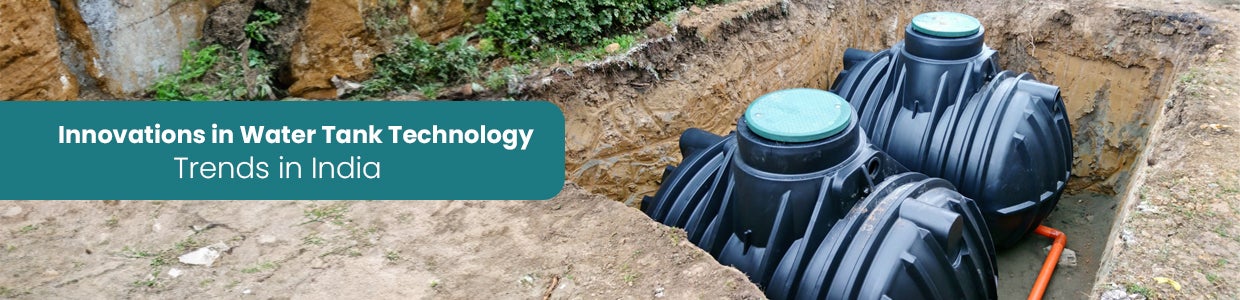
Innovations in Water Tank Technology: Trends in India
As a water solutions provider serving communities across India, I have witnessed first-hand the diverse water storage challenges plaguing the country - from droughts to floods and groundwater depletion to rural storage needs. Efficient water storage and management have become extremely crucial at the household and community level.
This urgency has driven several innovations in water tank technologies specifically tailored to tackle India's water woes. Over the last few years, my team and I have been closely tracking some promising trends poised to transform water management in Indian communities:
Smart and Connected Water Tanks
Internet of Things (IoT) and sensors are increasingly incorporated into urban and rural water tanks. These allow us to directly enable remote real-time monitoring of parameters like water levels, quality, leakages, etc., on our mobile dashboards. The sensors transmit key data to the cloud, which creates alerts for potential issues.
For example, we can now proactively detect leaks and minimise wastage for our communities.
Such smart water tank management also allows optimised planning of water distribution, especially for rural community tanks shared by multiple households. Historical usage data gives us valuable insights into demand patterns. By analysing this data, we can flag potential shortage issues in advance and reroute water resources.
Advanced connected solutions also facilitate automated controls. It includes triggering automatic water treatment if quality thresholds are breached or enabling automated pumps to refill tanks when levels drop critically.
Startups like Sensegrass, with whom we have partnered earlier, have brought out affordable and solar-compatible IoT kits tailored for India's remote geographies.
Alternative Materials and Construction Methods
Traditional materials like concrete and steel used for water tank construction have several limitations in the Indian context. Concerns around corrosion, leakage and contamination have led us to explore alternatives customised for Indian hassles:
Plastic tanks with micro-polymer coatings provide durability and are lightweight and non-corrosive - suitable for roof-based installations.
Fabricated modular and multi-layer tank designs make replacing or scaling much easier than concrete tanks. We have successfully executed such projects in urban high-rises and rural housing clusters.
We use sustainable materials like bamboo for community-level village tanks, which enhance strength while remaining affordable. Local workforce skill development is an added advantage.
New-age materials provide strength and sustainability while lending themselves to customisable fabrication. This has worked very well for the needs and constraints we face on the field.
Sustainable Design Considerations
While functionality remains a top priority, sustainability aspects have also started gaining prominence in water storage design:
By incorporating rainwater harvesting structures and enabling the reuse of overflow water, we can substantially cut freshwater demands.
Conical tank base shapes need lower volumes than flat bases to output the same pressure. This dropped storage requirements by over 25% for a recent tiny home project.
We also advocate translucent rooftop tanks where possible since sunlight penetration improves disinfection, reducing maintenance costs.
Local materials, pre-fabricated components and community workforce allow us to execute projects faster while generating local employment - a win-win for all!
Capacity Management via Data Analytics
IoT-enabled water tanks now generate huge amounts of data, posing opportunities and challenges. Cloud and analytics solutions specially crafted for the water sector by companies like FluxGen help us leverage this data for sharper capacity planning and distribution:
Tank-level sensors transmit remote readings to centralised dashboards via mobile apps, providing cluster-level visibility.
Cloud-based analytics runs demand forecasting algorithms using seasonal demand patterns. This leads to proactive capacity planning and optimisation of water allocation between communities based on need.
Automated scheduling of water refilling using historical usage trends reduces operational overheads. Tanker trips to sites have been reduced by over 15% over the past year through optimised route planning guided by our analytics.
They have also experimented with AI-based predictive models for better demand planning, especially seasonal fluctuation. Initial results seem promising.
The Indian market has seen these promising innovations catering to local storage needs and on-ground conditions. The road ahead looks exciting as water management becomes smarter, more efficient and accessible, leveraging India's technology prowess!
Future Trends
Emerging technologies provide exciting new opportunities to enhance water infrastructure in India:
Expanding the rural reach of smart water monitoring
With improving rural connectivity, IoT-enabled smart monitoring and efficiency features are poised to penetrate rural areas
Solar-powered sensors and transmission hardware can mitigate power issues
Easy smartphone-based interfaces for community tank management
Solar-powered water ATMs with IoT-controlled output
Unmanned solar-powered automated water dispensing units in remote areas
Connected to web/mobile dashboards for managing output volume per use
Help alleviate water access issues for far-flung communities
Blockchain for tracking community asset usage
Blockchain-based distributed ledger systems allow transparent tracking of community water asset usage, storage volumes, and distribution
Tamper-proof records add accountability to water usage - quality, quantity and ownership
Can aid in public audit reviews and identification of issues
Drone-based tank inspections and sanitisation
Drones equipped with cameras and sensors provide rapid inspection of large tanks
No need for manual drainage for inspection
Automated drones can clean and sanitise interior surfaces
Challenges and Considerations
However, some key concerns persist that need to be addressed:
Lack of reliable connectivity and electricity supply in remote rural areas - Rural infrastructure lacks stable power and internet connectivity for smart water systems relying on continuous data flows.
Affordability and scale constraints for small communities - High costs and localised, small-scale implementations constrain the budget and scalability of smart water monitoring systems for rural areas.
Data privacy and system security risks - The collection of water usage data and system access poses risks of data breaches and potential system failures that can severely impact supply.
The behavioral shift towards technology adoption - Overcoming cultural inertia and lack of tech familiarity pose adoption challenges for automated smart water management systems.
Popular Water Tanks Brands- Sintex Water Storage Tanks | APL Apollo Water Storage Tanks | Plasto Water Storage Tanks | Spectron Water Storage Tanks
Water Tanks Related Top Searches - 500L Water Storage Tank | 750 Litre Water Tanks | 1000 Litre Water Tanks | 2000 Litre Water Tanks | Water Storage Tanks Under 5000 | Water Storage Tanks Under Price Rs. 10000 | Water Storage Tanks Above 10000
Water Solution Related Category - Faucets | Pipes Fittings | Showers | Bathroom Fixtures | Drains | Sinks | Hydraulic Valves | Sanitary Ware | Plumbing Combo Kits | Hard Water Filters & Softener
Related Water Storage Tanks Articles -
Types of Water Storage Tanks in India: A Comprehensive Guide
Exploring India's Top Water Tanks - Unveiling the Best Choices for Your Needs
Top Sellers






 +91 9999049135

