

Translate:

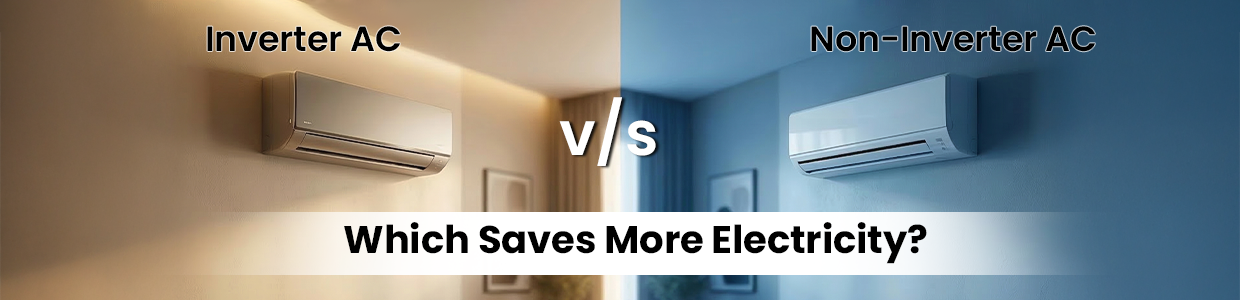
Inverter AC vs Non-Inverter AC - Which Saves More Electricity?
Do you want to buy an air conditioner but could not decide whether to buy non inverter AC or an inverter AC. Then, you are not alone! Many people have the same concern when buying air conditioners, especially in India. Because it is about long term electricity saving. As many brands promote energy efficiency in both categories, this creates a lot of confusion. If your main concern is reducing power bills, then this guide will explain everything in step by step in, simple ways. So read more to stay tuned!
What Is an Inverter AC?
Inverter AC means an air conditioner that uses a variable speed compressor. In this, instead of turning ?On? and ?Off? frequently, it automatically adjusts its speed based on your cooling needs.
For instance, if you buy an inverter AC 1 ton or an inverter AC 1.5 ton, the compressor initially works at full speed to cool the room quickly. Once the desired temperature is achieved, it will automatically slow down and maintain that temperature without shutting off.
How does a Non-Inverter AC Works?
Opposite to the inverter AC, non-inverter AC works on fixed speed compressor. It follows a simple cycle-
>> Compressor runs at full power.
>> Room reaches set temperatures.
>> Compressor turns off
>> Temperature rises again.
>> Compressor restarts at full power.
In this, the frequent ?Start? and ?Stop? process consumes more electricity. Even if you buy non-inverter ac 1 ton or 1.5 ton 5 star ac, the working pattern will remain the same. Remember, the star rating improves efficiency slightly but the core limitation of fixed speed operation will be the same.
What is the Power Consumption Difference Between an Inverter and Non Inverter AC?
Lets understand the most important factor that is ?Electric Usage.?
Majorly, the power consumption difference between both AC types (inverter and non inverter) comes from how the compressor operates.
>> Inverter AC: It adjusts power usage based on need
>> Non-Inverter AC: It uses maximum power repeatedly.
Now, if you see the real difference-
>> Inverter AC can save you up to 30% to 50% electricity.
>> Non inverter AC consumes more units because of the frequent restarting pattern.

In just a month, you will get to know the visible difference in electricity bills if you use AC for 6 to 10 hours.
Cost Comparison: Initial Investment vs Long-Term Savings
If you are looking for the cost comparison between inverter AC and non inverter AC in initial stages or long term, then inverter AC is usually costlier than non inverter.
But, if you compare it for the long term, then understand one thing non-inverter AC consumes more power, which means increased electricity bills for years, and in this case, inverter AC saves you on monthly electricity bills.
In short, even if you buy the best non inverter AC 5 star rating, it ends up with higher long term expenses because of the increased power consumption.
Pros and Cons- Inverter AC and Non-Inverter AC
The following are the advantages and disadvantages of Inverter AC and Non-Inverter AC-
Inverter AC Advantage and Disadvantages
Pros | Cons |
Energy Efficient: Inverter ACs adjust compressor speed based on cooling needs, which reduces power consumption. | High Price: Inverter ACs are more expensive than non inverter. Comes in the range between Rs. 30,000 and 50,000. |
Consistent Cooling: This maintains a stable room temperature without frequent fluctuation. | Costly Repairs: It comes with advanced technology that leads to higher repair and maintenance costs. |
Low electricity bills: No frequent ON/OFF, which leads low power consumption, leading to low electricity bills. | Sensitive to Voltage Fluctuation: Many inverter AC models come with stabilizer free operation, so extreme voltage issues can be seen. |
Quiet Operation: Inverter ACs run smoothly without any noise. | |
Long Lifespan: Less stress on components due to controlled operation makes it durable. |
Non Inverter AC Advantages and Disadvantages
Pros | Cons |
Lower Price: Non-inverter ACs are budget friendly in between Rs. 20,000 and Rs. 30,000. | High Power Consumption: The compressor frequently turns ON and off, which consumes more electricity. |
Simple Technology: It uses basic compressor technology that makes it easier and has low repair and maintenance costs. | Temperature Fluctuation: Cooling is not consistent, which can reduce comfort level. |
Good for Short Usage: If you use AC for 2-3 hours daily, then it will be a good option. | Noisier: The fluctuation of frequent ON/OFF cycles leads to more noise. |
Short Lifespan: The continuous compressor cycle puts more wear and tear on components. |
Which One Should You Choose Based on Usage?
So if you ask about choosing between an inverter AC and Non Inverter AC, then it completely depends on your personal usage. If you use an air conditioner frequently, then you must opt for an Inverter air conditioner, while for occasional usage, choose non inverter air conditioner.
Types of Inverter and Non-Inverter ACs Available
You can easily find both types of air conditioners available at the market, whether you need non inverter AC or an inverter AC. Based on your usage, make sure to opt for-
>> Split inverter AC is the most energy efficient and commonly used.
>> Inverter window AC works best for small rooms and budget friendly options
>> While non inverter ACs are mostly available in window and basic split AC models.
You can simply explore all the types of Air Conditioners online at one place, Moglix. Here you can find these appliances at competitive prices and get them at your doorstep.
Final Words
Comparing between inverter AC and non Inverter AC allows you to choose the right one for your needs and usage. Especially if you are curious to know about the power consumption, this guide simply explains everything that you must know. In short, if saving on electricity bills is your main concern, then an inverter AC is the best option!

Top Sellers





 +91 9999049135

