

Translate:

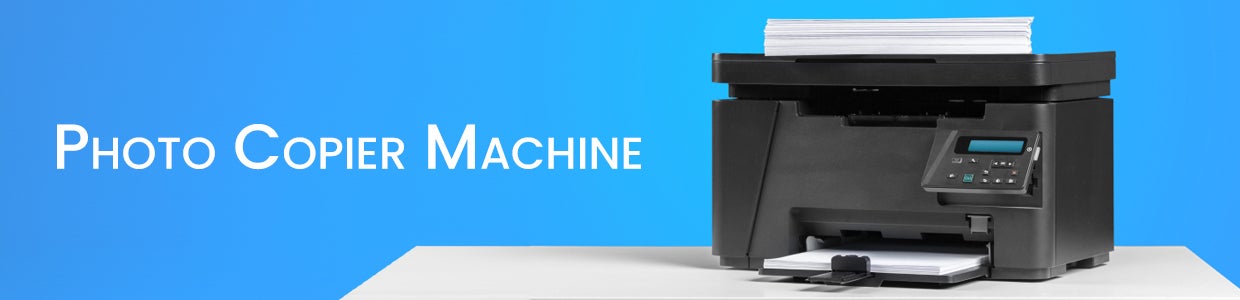
What is a Photocopier Machine and How Does it Work?
Photocopier machines, more commonly known as photocopiers, have become a mainstay of the modern office environment. You're familiar with using photocopiers whenever you need to make copies of documents in your workplace.
However, what happens inside these clever machines to turn your original paper into an exact copy? In this article, we'll explain how a basic photocopier works and the key components that make the copying process possible. Read on to gain a behind-the-scenes understanding of this office essential!
What is a Photocopier?
A photocopier, also called a copy machine or Xerox machine, is an electromechanical device designed to make copies of original documents quickly. Modern digital photocopiers incorporate scanner and printer technology to read paper documents and then print replicas at the push of a few buttons.
The "photo" in the name refers to photocopiers relying on light-sensitive photoreceptors to transfer images from one page to another during the copying process.
Photocopiers are vital productivity tools for offices that need to duplicate written information. Their ability to swiftly reproduce papers makes them indispensable to smooth administrative workflows.
Photocopiers come in various sizes and capabilities to suit different office requirements ? using one is typically as easy as placing your document on the glass surface and selecting the desired number of copies.
The 5 Key Components
A typical photocopier consists of five main components that work together to take your original and successfully duplicate it:
1. Scanner
The scanner uses bright light to capture images from original documents placed facedown. Mirrors and lenses reflect light towards a light-sensitive photoreceptor that detects light and dark areas forming text/images as electrical signals, digitizing the layout at a pixel level like a digital camera.
Copiers employ CCD technology using hundreds of tiny sensors for precision high-resolution scanning. Some scanners also deploy CIS (Contact Image Sensor) technology using long thin LED arrays with tiny sensor chips below the glass plate.
2. Toner
Toner is the key printing substance, typically black/coloured powder, that recreates scanned documents onto paper by sticking to electrically charged photoreceptor drum areas matching the original layout.
Copiers hold toner in replaceable cartridges inside the toner hopper reservoir and deploy the powder at precise times. Quality toner featuring evenly sized 5-10 micron polymer particles ensures sharp, high-definition prints with good readability. Inside the fuser, tiny polymers melt above 350 degrees Fahrenheit to firmly anchor printed output onto paper.
3. Photoreceptor Drum
The rotating photoreceptor drum lies at the heart of photocopying using electrical charges and lasers to recreate document images with toner. As it spins rapidly, electromagnets give an overall uniform positive charge first.
Next, lasers accurately expose and neutralize negative areas on the organic photoreceptor coating precisely tracing your document's scanned digital layout. This discharged electrostatic image attracts toner particles before transferring the completed toner image onto paper.
4. Fuser
Applying high heat and pressure, the fuser unit bonds toner onto paper for smudge-proof photocopies. Paper acquires a negative charge first to pull positively charged toner particles off the drum as it passes.
Adhering lightly initially, precision metal rollers with heat lamps inside heat the toner above 350 degrees Fahrenheit while firmly compressing to permanently fuse the polymers by melting and anchoring them into the paper's fibers. Non-stick coatings on rollers prevent hot melty toner from sticking. Cooling fans stabilise paper temperatures before the next printed sheet enters.
5. Printer
Digital copiers feature fully integrated printer components to output physical photocopies from scanned files. Unlike analog copiers that could only reproduce directly, integrated scanning and printing extend possibilities - you can save or email files digitally, upload copies online for others or modify as needed instead of just compulsory printing.
Touchscreen printers offer sophisticated utilities like duplexing, collating, booklet-making, and paper sorting/finishing alongside standard printing expected of photocopiers.
Also Read -Five best printers for home and office use with key specifications
How A Photocopier Machine Works?
The process starts by placing the original paper document on the glass plate. When the copy button is pressed, a bright light illuminates the document and reflects off its surface. This reflected light then bounces off a mirror inside the machine towards a lens.
The lens focuses this light onto a photoreceptor drum which is coated in a light-sensitive material. Wherever the light hits the drum, it neutralizes the electrical charge on the drum's surface. This creates an inverted copy of the document in the form of an electrostatic latent image.
Toner powder is then electrically attracted to the charged parts of the drum. Next, paper passes below the drum and the toner image transfers onto it with heat and pressure rollers. Finally, the paper exits the machine with a printed copy of the original document.
Also Read- What are the Types of Printers and their Uses?
The Most Common Photocopier FAQs
Before we dive into photocopier anatomy, let's answer some of the most frequently asked questions about these machines:
Q- Which photocopier machine is best?
Ans- The "best" photocopy machine ultimately depends on your specific business needs regarding printing and copying volume, speed, capability, security features, etc. Top multifunctional copiers come from reputable brands like Xerox, Canon, and Kyocera, with a balance of great performance across core parameters.
Q- What is a photocopy machine called?
Ans- Photocopy machines have several synonymous names like copy machine, photocopier and the ubiquitous shorthand Xerox machine (after the leading photocopier manufacturer). The official term is electrophotographic copier.
Q- How much is a photocopy machine?
Ans- Basic small office black-and-white copiers start from around Rs. 15000, while heavy-duty colour multifunction copiers for large enterprises can cost upwards of Rs 3 Lakh.
Q- How much does a copier machine cost?
Ans- Copier costs are variable based on print speeds, monthly copy volumes, paper sizes, colour scanning ability, etc. - from basic Rs. 15000 home models to premium Rs 50,000 office systems. Average good-quality copiers fall in the Rs 30000 to 40000 range. Recurring toner expenses are also there.
Top Sellers



 +91 9999049135

