

Translate:


Which Type of Heater is Best For a Room? ( A Practical Guide For India- Pros, Cons, and How to Choose)
Heating needs in India vary a lot - from light winter mornings in Chennai to freezing nights in Shimla. There is no single best heater for every situation. The best heater depends on: room size, insulation, how long you will run the heater, whether you need quick heat or steady background warmth, safety concerns, and your electricity/fuel cost. Below points will explain every common room-heater type available in India, give pros and cons, practical wattage guidance, safety and buying tips, and quick recommendations by scenario.
Quick summary (one-liners)
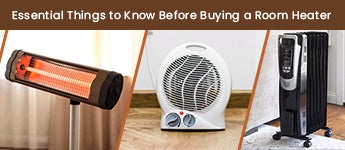
Oil-filled radiator: Quiet, safe, good for steady background heating; moderate power use. Great for bedrooms.
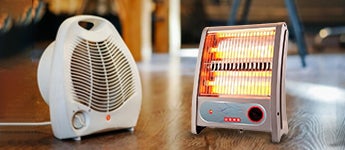
Fan heater / blower: Fast, delivers quick warm air; louder and less efficient for long runs. Good for short use in bathrooms/entryways.
Infrared (quartz/carbon) heater: Heats people/objects directly (like the sun). Instant warmth, efficient in drafty rooms or outdoors; not ideal if you want to heat the entire room uniformly.
Ceramic heater / PTC: Faster warm-up, safer surfaces; compact and efficient for small rooms.
Convection panel / Glass panel: Low profile, silent, good for continuous background heat; wall-mounted options.
Kerosene / LPG / Gas room heaters: Powerful, cheap fuel-run in some areas, but need ventilation and have CO/fumy-risk. Use only with caution.
Heat-pump / AC in heat mode: Most energy-efficient option for larger rooms if you already have an AC/heat-pump (higher upfront cost).
Halogen / mica: Cheap and instant but often small heating area and can feel harsh.
Heater Types - How They Work + Pros & Cons (India-focused)
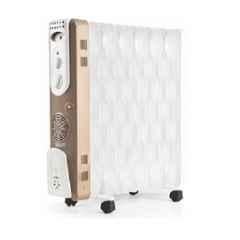
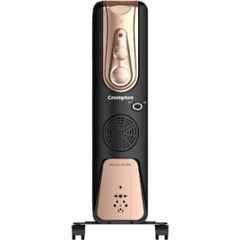
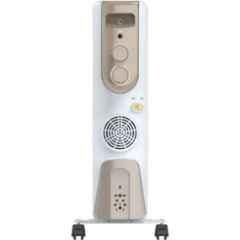
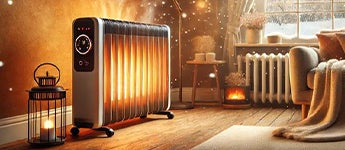
1. Oil-Filled (radiator) Heaters
How they work: Electric element heats oil sealed inside metal fins - heat transfers to air by convection and radiation.
Pros:
Quiet (no fan).
Stable, long-lasting warmth (radiates heat even after switching off).
Low surface temperature ? safer around children.
Low maintenance, no fumes.
Cons:
Slow to warm a cold room (needs time to heat the oil).
Heavy / bulky.
Not ideal for very quick heat.
Best for: Bedrooms, small-to-medium rooms where you want silent, steady warmth.
Typical wattage: 1 - 2.5 kW models common.
Safety notes: tip-over protection and thermostat are important.
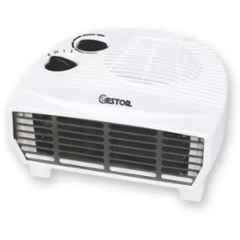
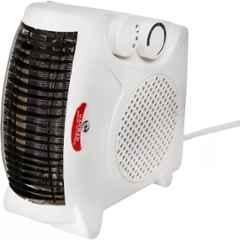
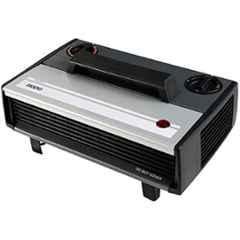
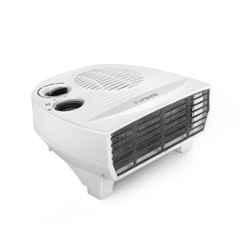
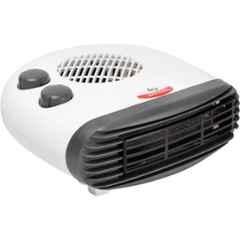
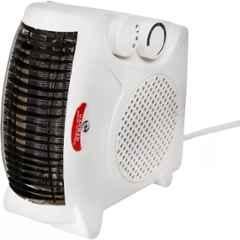
2. Fan (blown-air) Heaters
How they work: Electric heating coil + fan that blows heated air into the room.
Pros:
Very fast heat delivery.
Compact and cheaper upfront.
Cons:
Noisy (fan).
Less efficient for long-run background heating (warm air mixes and is lost).
Surface temps and exposed coils can be hazardous.
Best for: Quick heat in bathrooms, small entryways, short-term use.
Typical wattage: 1 - 2 kW.
Safety notes: Avoid near water; models with thermal cut-off and grill are preferred.
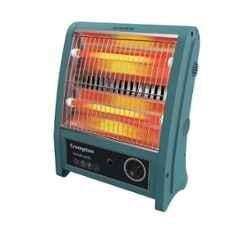
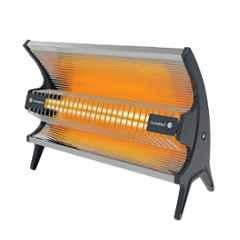
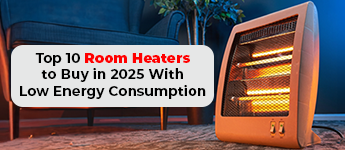
3. Infrared / Quartz / Carbon Heaters (radiant)
How they work: Quartz heaters emit infrared radiation that warms objects and people directly rather than heating air.
Pros:
Instant sensation of warmth; efficient for spot-heating.
Works well outdoors or in drafty rooms where heating air is wasteful.
Often lower running cost if you heat only a person/area.
Cons:
Does not warm air uniformly - corners remain cold.
You must be in the line of sight to feel warmth.
Some models have bright lamps.
Best For: Getting instant warmth sitting near it, balconies, poorly insulated rooms for short periods.
Typical wattage: 0.6 - 2 kW.
Safety notes: Avoid direct, prolonged skin exposure at close range; models with protective grills are safer.
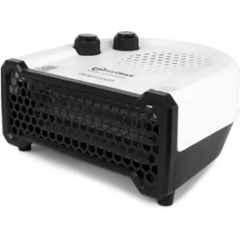
4. Ceramic / PTC Heaters
How they work: Ceramic heating element (Positive Temperature Coefficient) self-regulates; fan often used.
Pros:
Fast heat, safer surface temps, energy-efficient thanks to self-regulation.
Compact and more efficient than basic coil heaters.
Cons:
Typically suited to small rooms.
Fan noise may be present.
Best for: Small bedrooms, study rooms; people wanting safer electric heaters.
Typical wattage: 0.5 - 2 kW.
5. Convection Wall-Panel / Glass-Panel Heaters
How they work: Flat panels heat air by convection and sometimes by IR radiation. Can be wall-mounted.
Pros:
Silent, low profile, good for continuous background heat.
Aesthetically pleasing and space-saving.
Cons:
Slow to heat initially, ineffective for very large rooms unless sized correctly.
Best for: Hallways, bedrooms, apartments where you want unobtrusive heating.
Typical wattage: 0.5 - 2 kW.
6. Halogen / Mica Heaters
How they work: Halogen bulbs or mica sheets emit radiant heat.
Pros:
Instant heat and cheap units.
Cons:
Small effective area, can be harsh/uncomfortable for long periods.
Halogen bulbs can be bright and fragile.
Best for: Short-term spot heating.
Typical wattage: 0.4 - 1.5 kW.
7. Kerosene / Diesel Room Heaters
How they work: Burn kerosene/diesel to generate heat (fan-forced or convection).
Pros:
Cheap fuel in some areas; powerful heat even without electricity.
Cons:
Emits fumes and odors; risk of carbon monoxide (CO); needs ventilation.
Smelly and needs regular maintenance/refueling.
Best For: Remote/rural locations where electricity is unreliable and ventilation can be arranged.
Safety Notes: Only use outdoors or in well-ventilated spaces; CO detectors essential.
8. LPG/Gas Room Heaters (Portable)
How they work: Burn LPG to produce heat (radiant or convective). Some Indian models exist for small rooms.
Pros:
Powerful heat, cheaper to run in localities with low LPG cost.
Cons:
Carbon monoxide / suffocation risk if used in closed rooms; leakage/explosion risk if wrong hose/fittings or cylinder handling.
Best for: Emergency heating when used safely in ventilated spaces with commercial-grade appliances and gas safety gear.
Safety notes: Use only certified appliances, ensure ventilation, install gas leak detectors.
9. Heat Pumps / Reverse-Cycle AC (using AC in heat mode)
How they work: Move heat from outside air into the room (works even in cool temperatures). Much more energy-efficient than resistive electric heaters.
Pros:
Lowest running cost per unit heat (COP often >2 - 4).
Can cool in summer - two-in-one solution.
Cons:
High upfront cost; performance drops in very cold climates (but many modern units work well down to low temperatures).
Needs professional installation and periodic servicing.
Best for: Large rooms, families planning frequent/long heating, long-term cost savings.
Typical wattage: Electrical input is lower relative to output due to heat-pump efficiency (e.g., 1 kW electricity ? 2.5 - 4 kW heat equivalent).
Safety/installation: Proper installation and sizing by HVAC professionals required.
Running cost example (illustrative)
Running cost depends on your local electricity or fuel price. Example for electricity (assume electricity? 8 per kWh - replace with your actual rate):
Heater power = 1.5 kW.
Running time = 2 hours.
Energy consumed = 1.5 kW x 2 h = 3.0 kWh.
Cost = 3.0 kWh x 8/kWh = 24.
(Change the numbers to your local power rate for exact figures ? electricity price in India varies by state, tariff and slab.)
Safety checklist (must-read for India)
Prefer models with overheat cut-off, tip-over switch, and thermal fuses.
For gas/kerosene/LPG heaters: ventilate well and use CO detectors. Never sleep in an unventilated room with combustion heaters running.
Avoid placing heaters near curtains, bedding, paper, or any flammable materials. Keep 1 m clearance recommended.
Use proper earthing and good-quality sockets; avoid long thin extension cords for high-power heaters.
For families with kids/pets: choose oil-filled or panel heaters with low external surface temperature and grills.
Clean filters and fans periodically; clogged vents reduce efficiency and may increase fire risk.
Maintenance Tips
Electric heaters: dust off grills, check power cord condition annually.
Oil radiators: generally maintenance-free; check for paint damage and element operation.
Heat pumps / split AC: clean filters every 2 - 3 months, service yearly.
Combustion heaters (kerosene/LPG): have a qualified technician service them regularly.
Which Heater is Best for Common Scenarios in India?
Small bedroom, quiet nights, sleeping ? Oil-filled radiator or panel heater (silent, steady).
Short bursts of heat (bathroom/entryway) ? Fan heater or infrared for instant warmth.
Poorly insulated room or balcony ? Infrared (radiant) heater (heats people, not air).
Large living room, frequent use ? Heat pump / split AC in heat mode (better long-term running cost despite higher upfront).
Rural/off-grid / power outages ? Kerosene or LPG/gas - only if used with proper ventilation and CO awareness.
Budget / occasional use ? Small ceramic/halogen for spot heating; but expect compromise on comfort and area coverage.
Buying Checklist (what to check before you buy)
Wattage matched to your room (use the 100 - 150 W/m square rule).
Thermostat and adjustable settings (auto on/off saves power).
Safety features: tip-over switch, overheat cut-off, child lock.
Noise level (dB) if you will use it in bedroom.
Portability & weight if you move it often.
Warranty and service network in your city/state.
Energy efficiency - models with thermostatic control and timers are cheaper to run.
Build quality & IP rating if used in bathrooms (splash-proof models only).
FAQ (short)
Q: Are infrared heaters cheaper to run than oil radiators?
A: For spot heating (one person), yes - infrared is efficient. To heat an entire room continuously, a properly sized oil radiator or heat pump may be better.
Q: Can I use a space heater with an ordinary extension cord?
A: Avoid thin/cheap extension cords. Use a thick-rated cable or plug directly into the wall socket. Check heater current draw (amps) and ensure cable rating matches.
Q: Which is better for allergic people?
A: Oil-filled radiators and panel heaters (no fan) are less likely to stir dust. Fan heaters can circulate dust and allergens.
Final recommendations (practical)
If your priority is quiet, safe overnight heat ? oil-filled radiator or convection panel (1 - 2 kW depending on room).
If you need instant, directional warmth ? infrared / quartz heater.
If you want long-term lowest running costs for regular heating (and can invest upfront) ? heat-pump / reverse-cycle AC.
If electricity is unreliable and you must use fuel-based heating, be extremely careful: use in ventilated spaces, install CO detector, and prefer professionally installed LPG options.

Top Sellers




 +91 9999049135

