

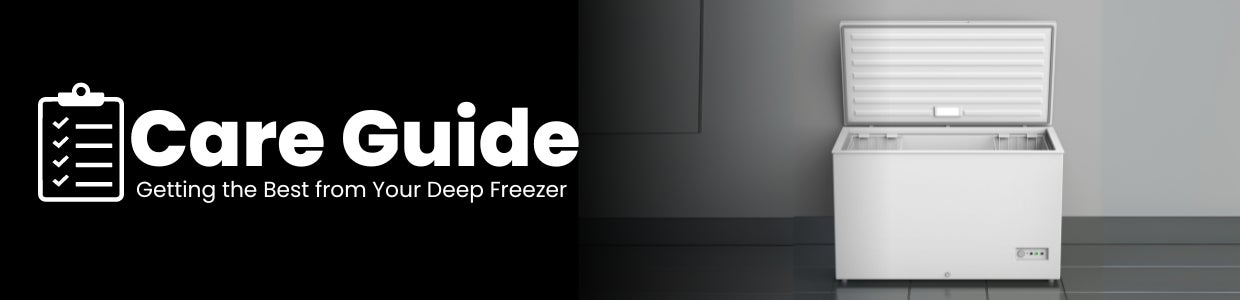
Care Guide: Getting the Best from Your Deep Freezer
A deep freezer is a good machine for food preservation and is very effective for large-scale food storage over a fairly long period. Be it the bulk food you purchased and stored, your self-grown fruits and vegetables, or the ready-made food prepared earlier and stored in your deep freezer, proper care and maintenance will benefit you to a larger extent in keeping up the optimal functioning and longer life. Here is a detailed guide that will help users cover all critical points in keeping a deep freezer running.
1. Right Placing and Installing
? Place it in a cool, dry area away from direct sunlight and heat sources, like ovens or radiators. It will work well in a garage or cellar, but be sure not to have temperatures too hot in the summer or cold in the winter.
? Ventilation: There must be at least 3 inches of space around the sides and the back of the freezer to provide good space. It avoids the unit's overheating and operation smoothening.
? Leveling: Proper alignment of the freezer horizontally has to be carried out using a level. This will ensure no future problems with door sealing and draining properly at the time of defrost.
? Power Supply: Plug your freezer into a dedicated circuit so that you don't place an overload on the outlet. Also, do not use an extension, which might cause a voltage drop.
2.Temperature control
? Most Appropriate Temperature Setting: deep fridge should be set to 0�F (-18 degrees Celsius) or lower. It will prevent bacterial growth in food and ensure good quality food is maintained.
? Temperature Monitoring: The internal temperature must be cross-checked on a regular basis by keeping a thermometer inside the freezer. In-built thermometers in freezers are installed in many of them; however, consumers should make use of an external thermometer to keep it in check continuously.
? Steady Temperature: Minimize the number of openings and/or the duration the freezer door is open to prevent fluctuating temperatures.
3.Proper Loading and Organization
? Don't Overload: Allow for some space between packaged foods to let cold air circulate. It's a fact: Overcrowding a freezer makes it work that much harder to hold temperatures, and food may not freeze properly.
? Label Everything: Label things with contents and the date the item was frozen. This comes in handy in rotation, thereby preventing wastage.
? Organize strategically: Proper rotation is achieved when newer items are placed or positioned inside the freezer towards the bottom, while older items are brought forward.
4. Periodic Cleaning
? Periodic Cleaning: Clean the freezers once or twice a year, or more often, as their contents may need.
How to Clean
Turn it off and empty, Unplug the freezer and take out shelves and drawers.
Scrub inside with warm water and mild detergent or baking soda. Dry/wipe with clean, dry cloth. Shelves and drawers need to be washed separately and dried.
The Gasket (door seal) is to be cleaned with a mild soap solution.
All to be dried, then shelves and drawers to be kept back and freezer can be plugged in and allowed to reach the proper temperature and then restocked
Quick Cleans: Spills to be immediately wiped up. This will avoid odor and staining.
Different from the unit models with a frost-free feature, in this regard, it is generally very important to defrost regularly if your freezer does not have this feature:
When to Defrost: Defrost when the thickness of any frost buildup reaches � inch.
Defrosting Steps:
1. Remove All Food.
2. Unplug the freezer.
3. Shave ice accumulation using plastic scrapers; never use metal tools.
4. Use towels to dry absorbing melting ice.
5. Clean and dry the inside.
5. Replacing the Door Gasket
? Check: Check outer gasket, or the door seal, periodically for cracking, tears, or deforming.
? Inspect the seal: Close the door on a piece of paper. If you can pull the paper out very easily, it might be the time for a new seal.
? Replace: Replace the seal at once in case it is damaged for effectiveness.
6. Be ready for a power outage.
Some advance planning can help save your frozen foods during an extended power outage:
? Keep the door closed: If there is a power outage, keep your freezer door closed. If left unopened, a full freezer will keep its temperature for up to 48 hours.
? Have ice packs: Consider keeping some packages of ice in your freezer. These also can help keep the temperature while the power is out.
? Have a Backup Plan: For lengthy outages, dry ice may be needed or foods actually transferred to another location that has power.
7. Energy Efficiency Tips
Maximizing energy efficiency will save you money and prolong the life of your freezer:
? Keep It Full: A full freezer will hold its cold better than an empty one. If it's not full use containers of water to fill space.
? Let Piping-Hot Foods Cool First: Allow foods that are piping hot to cool before putting them in the freezer to help if lighten your freezer's workload.
? Vacuum Those Coils: The condenser coils at the rear or underneath tend to collect much dust. To really excel, vacuum there every six months.
? Check the Temperature: Sure, the freezer feels cold, but maybe it should be even colder, or really feels too cold, and that means it is running harder than it really needs to. Then, just verify with a thermometer that it actually is 0�F (-18 degrees Celsius).
? Too Much Frost Buildup: This problem is usually due to a faulty door seal or opening the door too often. Look for the source of the leak or replace the seal as needed, and minimize opening the doors.
? Noises and Other Sounds: The appliance does make some sounds?a little noise is common, but considerably loud sounds, along with some other weird noises, can mean there is something wrong with the compressor or fan. If it does persist, contact an expert.
? Freezer Not Cold Enough: Check the thermostat setting; have good ventilation and ensure that it is not over packed. If problems persist, it may require professional servicing.
? Ice Maker Problems: If your freezer has an ice maker, make sure the waterline is not kinked, and the ice maker is on. Clean the ice maker up regularly according to the manufacturer's instructions.
8. Professional Maintenance
Although regular maintenance at home is essential, professional maintenance can help discover some issues when they are only in the budding stage:
? Annual Inspection: In the case of an old freezer, have it professionally inspected once every year.
? Professional Cleaning: The condenser coils and a fan are parts that are cleaned from the inside every other year by using a professional.
? Prompt Repairs: Whenever you remain vigilant to detect any significant problem, you just need to pick up the phone and call in a professional as soon as possible; quick repairs help stop further breakdowns.
The freezer is one of the key investments in your home food storage system, and with good care, it will serve longer and more efficient. Following the guides on siting, setting the temperature, organizing, cleaning, and maintenance, you get peak performance from your freezer for many years to come.
By spending a little time to care for your deep freezer, you will not only be taking good care of an appliance, but also ensuring that the food is safe for your family, energy is utilized to the maximum, and you extend the life of a key component in the value of your household. Whether it's storing this season's harvest or preparing bulk-cooked food ahead of time for a month, or just taking advantage of a good deal when buying in bulk, the deep freezer is today's tool at home.
Top Sellers



 +91 9999049135

