

Translate:

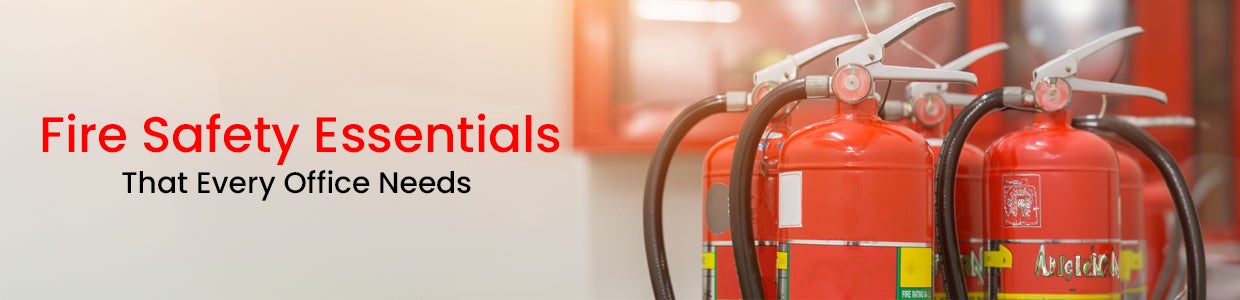
Top Fire Safety Essentials That Every Office Needs
Fires in offices and workplaces can lead to devastating consequences - widespread property damage, severe injuries, loss of life, and disruption of business operations. As an employer or office administrator, you must prioritise fire safety and make your office environment as fire-safe as possible. This article discusses the essential fire safety essentials every office must get, implement, and maintain.
7 Fire Safety Essentials & Measures For Offices
These seven fire safety measures are a robust foundation for creating a fire-safe office environment. However, stay updated on local codes and regulations, which may specify additional requirements. With responsible fire safety practices, offices can drastically reduce the likelihood and impact of fire emergencies.
1. Install and Maintain Fire Alarm Systems
A fire alarm system serves as the first line of defence against fires by quickly detecting smoke or heat and alerting employees to evacuate. Install smoke detectors, heat detectors, and manual pull stations at strategic locations throughout the office, including common areas, store rooms, basements, and stairwells. Smoke detectors should also be placed in HVAC ductwork to identify any smoke entering ventilation systems.
Ensure the fire alarm panel is accessible only to authorised personnel. You should check the entire system regularly to verify that all components function correctly. Conduct annual maintenance of detectors, alarm panels, wiring, and batteries. Update obsolete alarm systems to ensure optimal reliability and coverage. Integrate the fire alarm system with lighting controls, ventilation shutdown, door unlocking, and other fire safety functions.
2. Design and Implement Evacuation Plans
Every office must formulate a clear evacuation strategy and plan. Begin by preparing floor plans, setting exit routes, exit stairwells, assembly areas, etc. Install adequate illuminated exit signs to guide occupants towards exits. Emergency evacuation maps should also be posted in accessible areas. Assign specific evacuation roles and duties to designated personnel. Conduct regular evacuation drills, initially under ideal conditions and then under varying scenarios, to gauge readiness.
Ensure all employees are familiar with the sound patterns of fire alarms and corresponding evacuation instructions. Update the evacuation plan periodically to account for any office layout or occupancy changes.
3. Provide and Maintain Adequate Fire Extinguishers
Fire extinguishers act as the first line of defence against small fires. Install portable fire extinguishers throughout the workplace for different fire classes - A, B, C, D, and K. Wall-mounted extinguishers must be placed along exit paths and common areas. Restrict access to only trained personnel through proper signage and locks where required. You must also inspect extinguishers monthly for damage or tampering. Weight or pressure test them annually to verify operational integrity. Also, recharge chemical extinguishers and replace damaged hoses or nozzles as needed. Provide proper mounting brackets and signage for easy visibility and accessibility. Educate your employees on using extinguishers safely for different fire types.
4. Enforce Strict Housekeeping Practices
A clean and organised office minimises potential fire hazards. Cluttered spaces make detection and evacuation difficult. Ensure you have proper storage protocols for chemicals, stationery, documents and other flammable materials. Provide adequate non-combustible receptacles for oily rags, chemical-soaked materials, etc. Inspect electrical panels, wiring, and equipment regularly and address any defects in your office immediately.
You can also enforce strict no-smoking policies to avoid ignition sources. Limit clutter in evacuation paths and keep stairwells of your office completely clear of obstructions.
5. Conduct Regular Fire Safety Training for Employees
Fire safety training is imperative for employees to understand hazards, prevent fires, and respond appropriately during emergencies. Include instruction on fire properties, common ignition scenarios, fire prevention strategies, and correct use of firefighting equipment. Demonstrate how to activate fire alarms and safe evacuation procedures to your employees. Also, highlight the importance of reporting fire hazards.
Conduct hands-on fire extinguisher training outdoors or in special facilities. Repeat training annually and incorporate emergency drills for skill reinforcement. You should also maintain training records for each employee. With that, you can customise training for employees in higher-risk departments like maintenance, housekeeping, kitchen, etc.
6. Designate Fire Wardens and Establish Emergency Teams
Appoint your knowledgeable employees as fire wardens for each department or floor to coordinate fire safety and evacuation. Fire wardens will conduct routine inspections, enforce safe practices, maintain fire systems, and assist in evacuation during emergencies.
Your fire wardens will require specialised training to perform their role effectively. You should train emergency response teams in first aid, evacuation guidance, and emergency communications. They act as support to assist fire wardens and can work with external emergency services when required.
7. Regularly Inspect and Maintain Fire Safety Equipment and Systems
You should ensure periodic inspection, testing, and maintenance of fire safety equipment installed in your office. You must check alarm systems, detectors, sprinklers, fire doors, and emergency communications at scheduled intervals per regulatory standards.
- Record test results and maintenance activities.
- Upgrade ageing or defective systems and equipment.
- Take faulty systems offline and notify occupants till repairs are complete.
- Keep spare parts and additional inventory to minimise downtime.
FAQs on Office Fire Safety
What are some effective fire safety tips in an office?
Ans- Here are some tips that can help: keep evacuation paths clear, report hazards immediately, know the locations of fire equipment and store flammables securely. Also, never tamper with fire systems and participate in emergency drills.
What are essential fire safety equipment for offices?
Ans-Smoke detectors, sprinklers, ABC fire extinguishers, fire alarms, emergency lighting, and fire doors are some of the essential fire safety equipment for offices.
What causes most office fires?
Ans-Faulty electrical equipment, mishandling of chemicals, unauthorised cooking appliances, smoking materials, and arson are some of the most common reasons for office fires.
In Summary
Fire safety should be an organisational priority, not an afterthought. Leverage technology and human resources to implement robust, proactive measures. Train employees to take shared responsibility. Conduct regular audits and update systems and processes periodically. Office administrators must lead by example to nurture a robust fire safety culture. Recall that workplaces with better fire safety controls experience 80% fewer fire incidents. Effective fire risk mitigation saves lives and protects business assets. To get quality fire safety equipment such as alarms and extinguishers, visit Moglix, which provides certified and ISI-marked fire safety products for offices.
Top Sellers


 +91 9999049135

