
Translate:

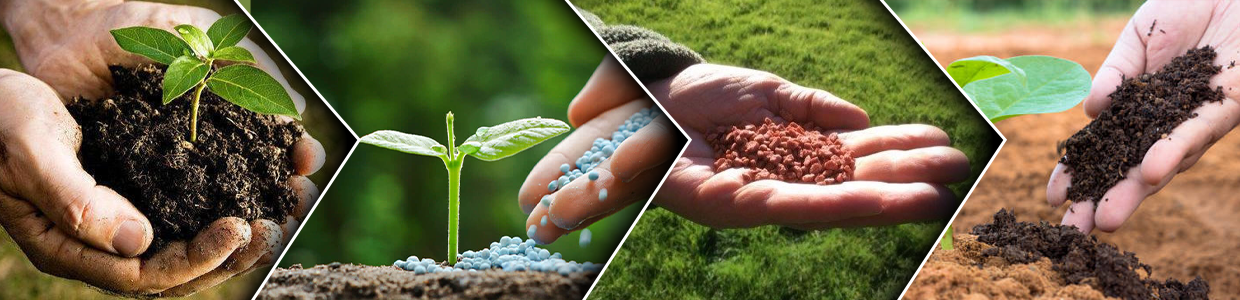
हर माली को स्वस्थ रोपण सुनिश्चित करने के लिए उर्वरकों के प्रकारों के बारे में पता होना चाहिए
उर्वरक यौगिक और रासायनिक पदार्थ हैं जो मुख्य रूप से फसलों को आपूर्ति करने के लिए उपयोग किए जाते हैं। इस उद्देश्य से उनकी प्रोडक्टकता बढ़ाने के लिए और फसल की उपज बढ़ाने और फसलों की बेहतर गुणवत्ता के लिए दुनिया भर के किसानों द्वारा दैनिक आधार पर उपयोग किया जाता है। इनफर्टिलाइजर contain some of the essential nutrients that are required by the plants such as nitrogen potassium phosphorus that eventually enhances the water retention capacity of the soil that increases its fertility.
Plants require nutrients to grow, which they absorb from their root systems from the soil. Fertilizers provide plants with the primary nutrients as well as essential secondary elements. The soil's productive potential decreases with each harvest unless nutrients are replenished.
Bio fertilizer:
Bio fertilizers are microbe-containing substances that aid in the promotion of plant and tree growth by increasing the supply of essential nutrients to the plants. Mycorrhizal fungi, blue-green algae, and bacteria are among the living species found in it. Mycorrhizal fungi tend to extract minerals from organic matter for the plant, while cyanobacteria are known for their ability to fix nitrogen.
The method of transforming di-nitrogen molecules into nitrogen compounds is known as nitrogen fixation. Some bacteria convert insoluble soil phosphorus to soluble forms and as a result, there will be more phosphorus available.
Uses of Biofertilizers:
- Rhizobium for legume crops.
- Azotobacter/Azospirillum for nonlegume crops.
- Acetobacter for sugarcane only.
- Blue-Green Algae (BGA) and Azolla for low paddy land used to grow rice.
Benefits of Biofertilizers are :
- Biofertilizers are great to enhance soil texture and plant yields.
- Pathogens to flourish are not allowed in this.
- They are good at being eco-friendly and cost-effective.
- Since biofertilizers are natural fertilizers, they protect the environment from contaminants.
- Many harmful substances in the soil that can cause plant diseases are destroyed by them.
- Even in semi-arid conditions, biofertilizers are reliable.
Chemical fertilizers:
Chemical fertilizers are natural or synthetic chemical-based substances that generally contain one or more nutrients essential that enhance the growth of plants with increased soil fertility. One common chemical fertilizer high in use is the NPK fertilizers which are considered to be rich in nitrogen Phosphorus and potassium.
Use and benefits of Chemical fertilizers:
- They are considered predictable and reliable.
- They can be used in poor soils as well to make its fertility quick.
- They do have a sufficient amount of nutrients needed for the soil.
- They are cheaper than organic fertilizers and handy to use.
- They help the growth of the same vegetable plant within the same area, eliminating the need for crop rotation alternatively.
Potash fertilizer:
Potash fertilizer is often referred to as "potash," a word derived from an early processing method in which potassium was extracted from wood ashes and concentrated by evaporating the leachate in large iron pots ("pot-ash"). This strategy is no longer viable and is unsustainable in the long run. Potassium is lost from the soil during food processing and must be replaced.
Potash fertilizers are inorganic salts that are often manufactured dry and come in granular, coarse, and fine particle sizes. One of the difficulties in producing and using potash fertilizer is that the substance appears to cake and crystallize during handling, resulting in unwelcome dust.
Use of Potash Fertilizers are:
- Granulation
- Compaction
- Bulk Blending
- Storage
- Shipping
- Liquid Fertilizer Systems
The benefits of Potash fertilizers are:
- Potash Fertilizer is less problematic for bulk blending operations.
- It's easier to apply in the field, and there's less chance of air-seeders and other applicators being clogged.
- As a result of less windblown fertilizer dust, nutrient quality in the field eventually improves.
- Observance of regulations
- Device compatibility with liquids
पोटैशियम खाद:
K+ को सबसे लोकप्रिय पोटेशियम उर्वरकों (तालिका 3) में क्लोराइड (पोटेशियम का म्यूरेट) या सल्फेट (पोटेशियम का सल्फेट) के साथ मिलाया जाता है। पोटेशियम क्लोराइड (KCl) के तीन ग्रेड उपलब्ध हैं: 50 फीसदी के, 41 फीसदी के और 33 फीसदी के। Atrophic फसलों के लिए K+ उर्वरकों के रूप में दो बाद के प्रकार की सिफारिश की जाती है क्योंकि उनमें सोडियम क्लोराइड (NaCl) की महत्वपूर्ण मात्रा होती है।
चूंकि आधुनिक अत्यधिक केंद्रित उर्वरक असंतुलित पौधे पोषण का कारण बनते हैं, पोटेशियम सल्फेट-आधारित उर्वरक, जो अब तक केवल कुछ विशेष फसलों के लिए उपयोग किए गए हैं, एक व्यापक आवेदन हो सकता है।
पोटेशियम उर्वरकों में पोटेशियम नाइट्रेट उर्वरक (केएनओ 3) भी शामिल हैं जिनमें कांच के नीचे गहन बागवानी है। कैनाइट (कम विश्लेषण क्लोराइड आधारित उर्वरक) खनिज लवण हैं जिन्हें आंशिक या पूरी तरह से परिष्कृत किया गया है। रासायनिक रूप से वे KCl और NaCl मिश्रण हैं। कुछ में किसेराइट भी होता है, जो कच्चे माल में या उसके हिस्से के रूप में मिला हुआ हो सकता है।
पोटेशियम उर्वरकों का उपयोग और लाभ हैंः
- जड़ वृद्धि को बढ़ाता है और सूखे प्रतिरोध में सुधार करता है।
- टर्गर को बनाए रखता है; पानी की कमी और मुरझाने को कम करता है।
- प्रकाश संश्लेषण और खाद्य गठन में सहायता।
- श्वसन को कम करता है, ऊर्जा के नुकसान को रोकता है।
- शर्करा और स्टार्च के स्थानांतरण को बढ़ाता है।
- स्टार्च से भरपूर अनाज का प्रोडक्टन करता है।
- पौधों में प्रोटीन की मात्रा बढ़ जाती है।
- Builds cellulose and reduces lodging.
- Helps retard crop diseases.
Nitrogen fertilizer:
One of the most common types of fertilizers made from nitrogen (N) chemical combinations is nitrogen fertilizer. The plant nutrient must contain a minimum of 5% nitrogen to be considered an organic fertilizer. There are many nitrogen fertilizers available in the market such as Ammonium nitrate N34.4, Calcium ammonium nitrate N27, Nitrogen fertilizers with calcium, and Nitrogen fertilizers with sulfur.
One of the most preferred is the Ammonium nitrate fertilizers which give plants the nitrogen they need, which is particularly important during periods of rapid growth. Fertilization ensures not only successful growth and ripening, but also faster root production and nutrient absorption, as well as the prevention of yellowing leaves. Many essential plant growth processes are simulated and controlled by nitrogen.
Use and benefits of Nitrogen Fertilizers are:
- Nitrogen helps plants grow quickly and promotes the healthy production of foliage and fruit when added to garden soil.
- These fertilizers enhance the soil quality by increasing fertility.
- These are considered ideal and essential fertilizers for crop productions.
Phosphorus fertilizers
These fertilizers are made from rock phosphate, but rock phosphate is seldom used as a fertilizer because of its limited phosphorus supply and high transportation costs. Since it is corrosive, phosphoric acid is typically not used specifically as a fertilizer, although it is used to make other fertilizers with other substances mixed as a compound.
Use and benefits of Phosphorus fertilizers are:
- In agricultural soils, the rate of phosphorus accumulation is increasing.
- Cropping necessitates the use of nitrogen and phosphorus in the form of fertilizers in order to meet the increasing population's food demand.
- Root Growth - An essential nutrient for any plant's root growth.
- Plant Resilience - Phosphorus increases plant disease resistance and helps to support the root system.
Micronutrient fertilizer:
Other requirements for plant growth and soil health are secondary nutrients (S, Ca, Mg) and are also called micronutrients, which include iron, manganese, zinc, boron, molybdenum, and copper, in addition to the basic three essential nutrients of nitrogen, phosphorus, and potassium (NPK).
These secondary micronutrients are commercially available in a variety of ways for agricultural use, such as additives to commodity N, P, and K fertilizers. Micronutrient compounds that are homogeneous and granular are often manufactured and used either directly or as minor components in bulk NPK blends.
Use and benefits of Micronutrient fertilizers are:
- As for micronutrient fertilizers age and go through several handling steps during processing, storage, transportation, and application, they can physically break down and produce dust.
- Reduced airborne pollutants in the workplace and on the ground, resulting in better air quality.
- Reduced economic losses as a result of the valuable commodity being displaced by air
- Fertilizer that is easier to treat and mix with other fertilizers in bulk blending operations.
- Better product consistency and less windblown fertilizer dust result in increased nutrient production in the field.
Ammonium sulfate fertilizer:
Ammonium Sulfate, also known as (NH4)2SO4, is an inorganic salt that is used to provide nitrogen (N) and sulfur (S) to crops. It can be used as a single application fertilizer or as part of NPK blends and compound fertilizers. It has the nutrient analysis designation 0-0-21-24S for N, P, K, and S.
Use and benefits of Ammonium sulfate fertilizer :
- Reduced airborne pollutants in the workplace, resulting in better air quality.
- Prevents economic losses as a result of valuable products being displaced by air.
- In bulk mixing operations, it's easier to manage and has better compatibility with other fertilisers.
- Air seeders and other applicators are less likely to clog, making it easier to apply in the field.
- Works great as a result of improved nutrient production in the field.
Conclusion:
The write-up was all about the fertilizers and types of fertilizers available in the market. If you are planting plants and trees, then you must know the types of fertilizers that might be needed to increase productivity.
Looking for the top-rated Fertilizers?
Browse our complete collection and find the best product today.