

Translate:

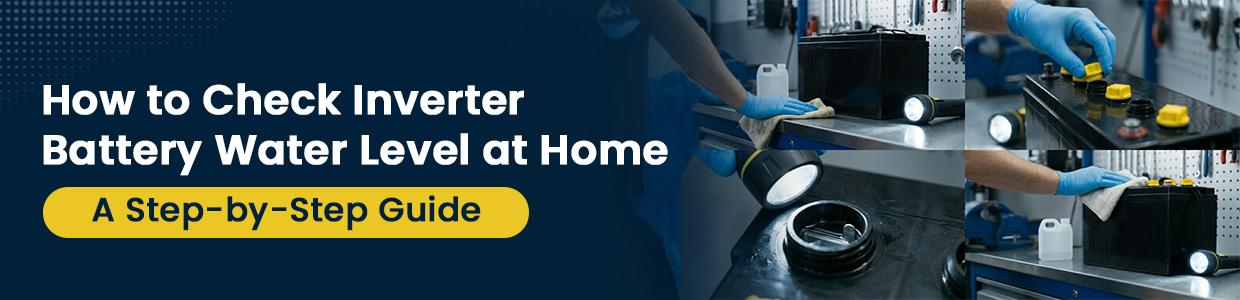
How to Check Inverter Battery Water Level at Home: A Step-by-Step Guide
If you want to check the inverter battery water level at home or the office. So you need to understand the complete process of how to check the inverter battery water level at home to improve battery performance, increase backup time and extend the overall lifespan of the battery. Whether your inverter have exide battery or a tubular battery, proper water level maintenance is important for smooth operation. In this guide, we have covered the entire process of how you can check the inverter battery water level at home.
Why Is Battery Water Level Important
In most homes, inverter batteries have lead acid batteries that contain a liquid mixture of water and sulfuric acid. During regular use and charging, some of the water gradually evaporates. If the water level drops too low, the battery plates can become exposed, which directly damages the battery and reduces its performance and lifespan.
There are several benefits of maintaining the correct water level-
Improve battery life
Ensure consistent power backup
Prevent overheating
Protect internal battery plates
Reduce maintenance costs
How to Check Inverter Battery Water Level at Home - Step By Step Guide
By following these steps, you can successfully check the inverter battery water level at home-
Step 1: Turn Off the Inverter
Start by turning off the inverter and disconnecting it from the power supply. It is important to minimize the risk of electrical accidents and ensure safe handling.
Step 2: Open the Battery Compartment
Now, remove the battery cover or access panel. Most inverter batteries have individual vent caps on top that offer access to the electrolyte chambers.
Step 3: Water Level Indicator
Next, you should inspect the water level indicator. As many modern batteries have a battery water level indicator that makes monitoring effortless. The indicator usually shows whether the water level is adequate, low or needs instant refilling.
So, if your battery has a transparent casing or an indicator window, then you can visually check the electrolyte level without opening the chambers.
Step 4: Electrolyte Level Manually
If you notice no built in indicator, then remove the vent caps carefully. By using the flashlight, you can look inside each cell using the flashlight if necessary. The electrolyte should cover the battery plates completely. As batteries mostly have the minimum and maximum markings inside the chamber, so the fluid level should remain between these marks.
Note: Never allow the electrolyte level to drop below the battery plates.
Step 5: Refill Distilled Water if Required
If the inverter battery water level is low, add only distilled water. Simply pour the distilled water slowly until it reaches the recommended level. But make sure to consider these factors-
Do not use tap water, mineral water or filtered drinking water because of impurities that can damage the battery?s internal components.
Do not overfill because it may lead to overflow during charging.
Step 6: Close the Caps Securely
Lastly, you are done with the process of checking and refilling the inverter battery water, then tighten all vent caps properly and close the battery compartment. Switch the inverter on and make sure everything is working properly and normally.
How to Fill Distilled Water in an Inverter Battery?
If you want to fill the distilled water in the inverter battery, here are several factors you need to check-
Battery type
Usage frequency
Charging cycles
Ambient temperature
Battery age
For residential inverter batteries, you should check the water level every 2 to 3 months. In areas with high temperatures or frequent power outages, you will need to check the battery monthly.
NOTE: Instead of following the fixed schedule, it would be better to inspect the water level regularly and refill only when necessary.
What is the Inverter Battery Water Level Float Indicator Cap Set?
In most modern batteries, an inverter battery water level float indicator cap set is available to simplify the maintenance. These caps contain a floating mechanism that rises or falls based on the electrolyte level. So the indicator usually displays-
Green: Water level is sufficient
Red or Low Mark: Water level needs attention
These float indicator caps reduce guesswork and help users check water shortages quickly. It is specifically useful for homeowners who are not familiar with the battery maintenance procedure. The best part of the float indicator cap set can directly reduce the risk of underfilling or overfilling the battery.
How to Check Inverter Battery Water Level 12V Batteries?
The process to check the inverter battery water level 12v then it is exactly the same as that of other lead acid inverter batteries. So here are the following steps to check-
Turn off the inverter.
Open the vent caps.
Check whether the electrolyte covers the plates.
Refill distilled water if required.
Secure the caps properly.
Note: The battery voltage does not change the inspection method. The thing that matters is whether the battery is a maintenance free battery or a conventional lead acid battery that needs periodic water refilling.
What Causes Inverter Battery Failure - DO NOT make these Mistakes
Avoid these mistakes that lead to battery failures-
Do not use tap water instead of distilled water. As tap water can introduce minerals and contaminants that reduce battery efficiency.
Do not overfill the battery, because it can cause electrolyte overflow and corrosion around battery terminals.
If you ignore the low water levels for a longer period, so it can permanently damage the battery plates.
Never open the battery when it is charging it directly exposes you to safety risks.
Do a small habit of regularly monitoring and proper maintenance of the inverter battery to avoid battery damage.
Sum Up
Inverter battery needs simple yet essential maintenance so you can easily perform checking water level at home. If you regularly inspect the battery water level so it can prevent battery damage, improve backup performance, and extend battery life significantly. So keep your inverter battery performing efficiently for years to come.
Frequently Asked Questions - FAQs
Q. How to Check Inverter Battery Water Level Lithium Batteries?
Ans. Lithium batteries do not contain liquid electrolyte chambers that need periodic water refilling. It is a sealed battery and designed to maintenance free. If you use a lithium inverter battery, then you do not require water level inspection and distilled water refilling is required. So always check and verify the battery type before attempting to open any battery compartment.
Q. How to check the inverter battery water level in Exide batteries?
Ans. In mostly, exide tubular inverter battery comes with water level indicators or transparent marking that makes monitoring easier. You should inspect the indicator periodically and refill distilled water whenever the level reaches the minimum mark. For exide, it is generally recommended to use only distilled water and avoid overfilling.
Q. Is it important to check the water level of the inverter battery?
Ans. Yes, inspecting your home's inverter battery water level can help to maintain its proper performance and durability.

Top Sellers


New Arrivals

UTL UTT1530 150Ah 12V Tall Tubular Inverter Battery, UTT-1530-A-XB
UTL UTT2072 200Ah 12V Tall Tubular Inverter Battery, UTT-2072-A-XB
UTL UTT1572 150Ah 12V Tall Tubular Inverter Battery, UTT-1572-A-XB






 +91 9999049135

