
Translate:


What Is a Submersible Pump and Which One Is Best for Your Needs?
Submersible pumps are one of the most efficient and widely used water pumping solutions for homes, agriculture, borewells, and industries. If you are planning to install a borewell pump or upgrade your water system, this detailed SEO-friendly guide will help you understand everything about submersible pumps-including how they work, types, features, benefits, and answers to commonly searched questions (People Also Ask).
What Is a Submersible Pump?
A submersible pump is a water pump designed to operate while completely submerged in water. Unlike surface pumps, which pull water, a submersible pump pushes water to the surface.
It is commonly used in:
Borewells
Open wells
Underground tanks
Agricultural irrigation
Sewage and drainage systems
Because the pump works underwater, it prevents air blockage and improves efficiency.
How Does a Submersible Pump Work?
Many users search: How does a submersible pump work?
Here is the simple explanation:
The pump is placed underwater inside a borewell or tank.
An electric motor powers rotating impellers.
The impellers create pressure.
Water is pushed upward through a delivery pipe.
Since it pushes water instead of pulling it, the pump works more efficiently and does not require priming.
Types of Submersible Pumps
Borewell Submersible Pump
Slim design
Ideal for deep borewells (100-1000+ feet)
Open Well Submersible Pump
Suitable for shallow wells and tanks
Higher water flow
Sewage Submersible Pump
Handles dirty water and solids
Used in drainage systems
Agricultural Submersible Pump
High-capacity
Used for irrigation and farming
Key Features of Submersible Pumps
Energy-efficient motor
Stainless steel body
Corrosion-resistant material
Thermal overload protection
High discharge rate
Low noise operation
Uses of Submersible Pumps
Submersible pumps are widely used in:
Residential water supply
Borewell systems
Irrigation and farming
Industrial water transfer
Construction site dewatering
Sewage management
People Also Ask (FAQs About Submersible Pumps)
What Is the Difference Between a Submersible Pump and a Normal Water Pump?
A submersible pump works underwater and pushes water upward.
A normal (surface) pump stays outside the water source and pulls water using suction.
Submersible pumps are more efficient and better for deep water levels.
Which Submersible Pump Is Best for Home?
For most homes:
0.5 HP to 1 HP for shallow borewells
1 HP to 1.5 HP for deeper borewells
Stainless steel body preferred
Built-in thermal protection recommended
The best pump depends on borewell depth and daily water requirement.
How Much Electricity Does a Submersible Pump Use?
Electricity consumption depends on motor capacity:
0.5 HP pump approx. 0.37 kW per hour
1 HP pump approx. 0.75 kW per hour
2 HP pump approx. 1.5 kW per hour
Energy usage also depends on running time and load.
How Deep Can a Submersible Pump Go?
Standard home models: 100-300 feet
Heavy-duty agricultural pumps: Up to 1000+ feet
Always check the pumps head capacity before installation.
How Long Does a Submersible Pump Last?
On average:
8 to 15 years (with proper maintenance)
Life depends on:
Water quality
Voltage stability
Installation quality
Dry run protection
Can a Submersible Pump Run Dry?
No. Running dry can damage the motor.
Always install a dry-run protection system or control panel to prevent damage.
What Size Submersible Pump Do I Need?
To choose the right size, calculate:
Total head (depth + tank height)
Required flow rate (liters per minute)
Pipe size
Daily water consumption
A plumber or technician can help calculate the exact requirement.
Which Is Better: 1 HP or 1.5 HP Submersible Pump?
1 HP: Suitable for normal household use
1.5 HP: Better for deeper borewells or higher water demand
Choose based on borewell depth and building height.
What Are Common Problems in Submersible Pumps?
Motor failure
Voltage fluctuation damage
Sand blockage
Dry running
Cable damage
Regular maintenance reduces these issues.
How to Choose the Right Submersible Pump?
Before buying, consider:
Borewell diameter
Depth of water
Required discharge rate
Power supply availability
Water quality
Selecting the correct pump ensures higher efficiency and longer lifespan.
Advantages of Submersible Pumps
High efficiency
Silent operation
No priming required
Reduced cavitation risk
Long operational life
Suitable for deep water sources
Maintenance Tips
Avoid dry running
Use proper control panel
Check voltage stability
Clean pipes and filters
Schedule periodic servicing
Final Thoughts
A submersible pump is one of the best solutions for deep water supply in homes, farms, and industries. It offers energy efficiency, durability, and consistent performance.
If you are choosing a submersible pump for your home, always calculate the correct HP, depth capacity, and daily water usage. Investing in the right pump ensures uninterrupted water supply for years.
Looking for the top-rated Submersible Pumps?
Browse our complete collection and find the best product today.


Top Sellers
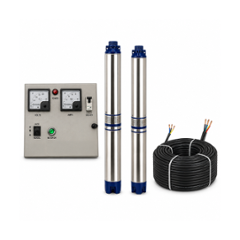
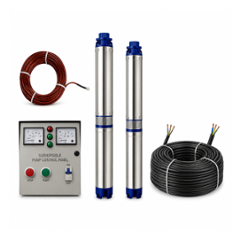
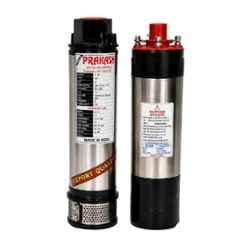
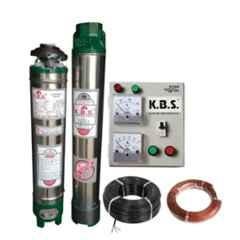
New Arrivals

Crompton 4W2/16-BUE-D40 2HP Single Phase 16 Stage Oil Filled Submersible Pump
Crompton 3W1/15-AQA-D 1HP Single Phase 15 Stage Water Filled Submersible Pump
Crompton 4W1/10-BUE-D40 1HP Single Phase 10 Stage Water Filled Submersible Pump
Crompton 3W1/10-AP-D 1HP Single Phase 10 Stage Water Filled Submersible Pump
Crompton 4VO1/8-BUE-D40 1HP Single Phase 8 Stage Oil Filled Submersible Pump
Crompton 4W2/14-BFE-D40 2HP Single Phase 14 Stage Oil Filled Submersible Pump
Crompton 4W14C2TPJ-VX 2HP Three Phase 14 Stage Water Filled Submersible Pump
Crompton 4W1.5/12-BFE-D40 1.5HP Single Phase 12 Stage Oil Filled Submersible Pump
Crompton 3W12AP1 1HP Single Phase 12 Stage Water Filled Submersible Pump
Crompton 4VO1.5/12-BUE-D40 1.5HP Single Phase 12 Stage Oil Filled Submersible Pump